
GEO / AEO / SEO autopilot
GEO, AEO & SEO Autopilot
Win AI search without a team. Search and AI discovery content generated automatically from real market demand.
AI citations & mentions
vs. baseline
organic traffic
90-day median
GEO articles / month
fully autonomous
GEO, AEO & SEO Autopilot is an AI system that turns real-time search demand, AI prompts, and competitor gaps into SEO articles, GEO-optimized content, and AEO-style answers, then publishes and refines them continuously, so your brand ranks on Google and gets cited by AI search engines without manual work.
The Problem
SEO alone is no longer enough
Organic discovery used to be mostly about ranking on Google. Now your buyers are also asking AI systems:
Without Axy.digital
manual workflow- What company should I use?
- What are the best tools for this problem?
- What are the alternatives to this product?
- Who are the leaders in this category?
- What should I know before buying?
- Which provider is best for my use case?
With Axy.digital
engine on- SEO articles
- GEO-optimized articles
- AEO-style answer content
- Prompt-cluster content
- Comparison pages
- Use-case pages
If your content is not structured for AI retrieval, citation, and recommendation, your brand may be absent from the answers shaping buyer decisions. At the same time, producing content manually is slow, expensive, and often disconnected from real demand.
What GEO, AEO & SEO Autopilot does
Generate content for the new search journey
Axy.digital's GEO, AEO & SEO Autopilot turns search demand, AI prompts, competitor gaps, and market signals into content automatically. It helps you create:
- SEO articles
- GEO-optimized articles
- AEO-style answer content
- Prompt-cluster content
- Comparison pages
- Use-case pages
- FAQ sections
- Internal linking recommendations
- Content refresh recommendations
The goal is not more content for its own sake. The goal is to help your brand become easier to find, cite, and recommend.
Prompt Cluster → Content
Search demand turned into citations
Customer prompts
"best ai marketing platform"
Content brief
Auto-built from gap analysis
GEO article
Optimised for citation & rank
AI citation
Cited in ChatGPT + Perplexity
How it works
How it works
Map demand
Axy.digital identifies the keywords, prompts, questions, and topics your customers are already searching.
Find visibility gaps
The engine shows where your brand is missing across Google and AI search.
Generate content briefs
Axy.digital creates structured briefs designed around search intent, AI retrieval, and citation potential.
Produce optimized content
Generate articles, landing pages, FAQs, and supporting assets aligned with your brand context.
Feed results back into the engine
Use visibility, citation, and performance data to improve future content recommendations.
What's included
Every capability, and the outcome it drives
Search demand analysis
Capture high-intent search demand as it happens
AI visibility gap detection
Know exactly where you're invisible in AI search
Competitor content gap analysis
Find and close the gaps competitors are missing
Prompt cluster mapping
Build content around the real questions buyers ask
Content brief generation
Turn every gap into a ready-to-write brief
SEO article generation
Rank on Google and win long-tail discovery
GEO article generation
Get cited and recommended inside AI answers
AEO article generation
Answer customer questions at scale, formatted for AI
Internal linking recommendations
Strengthen authority across your site
FAQ and structured content recommendations
Cover more ground without more writing
Content refresh workflows
Keep ranked pages from going stale
Cross-channel campaign generation
Turn one piece of content into a full distribution push
Why it matters
The next version of organic growth is citation-driven
In the AI discovery era, buyers may not click through ten blue links. They may ask one question and trust the answer.
That means your content needs to be structured, specific, useful, and authoritative enough to be retrieved, summarized, and cited.
Axy.digital helps you build that content system continuously.
CASE STUDIES & RESOURCES
Practical tips, real outcomes
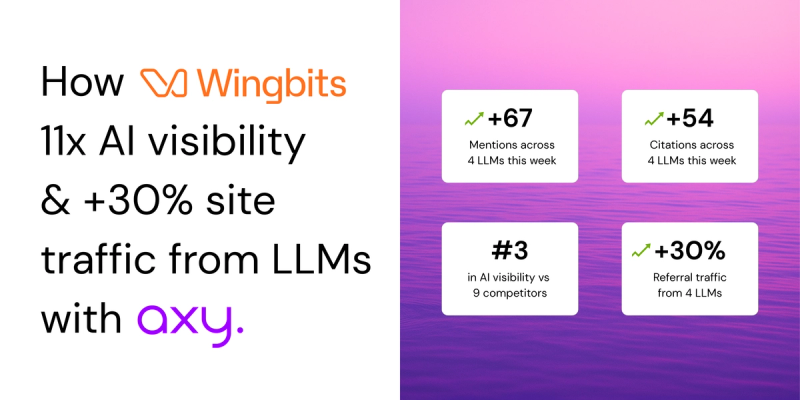
How Wingbits Achieved 11x AI Visibility and Displaced Incumbents in 90 Days
In 90 days, Wingbits went from nearly invisible in AI discovery to a top-cited authority in DePIN aviation — 11x AI visibility growth and rank #3 against incumbents with a decade of SEO dominance, using Axy.digital's GEO engine.
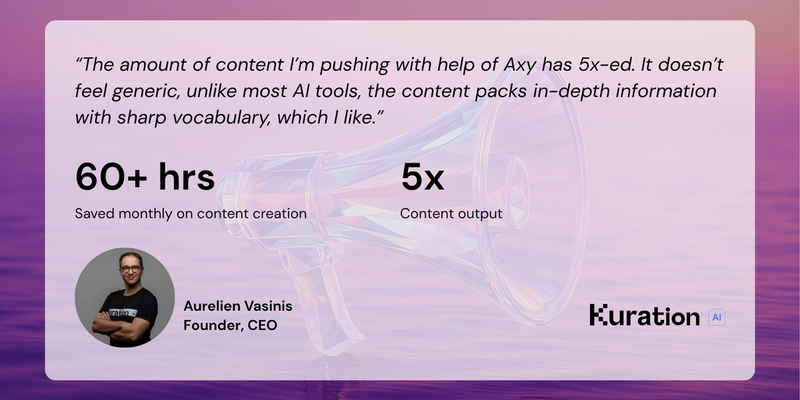
How Kuration AI scales smarter and faster with Axy
Kuration AI, a B2B data enrichment platform, scaled from 4 blogs a month to 17 and tripled LinkedIn output using Axy.digital's autonomous marketing engine — no agency, no extra headcount.
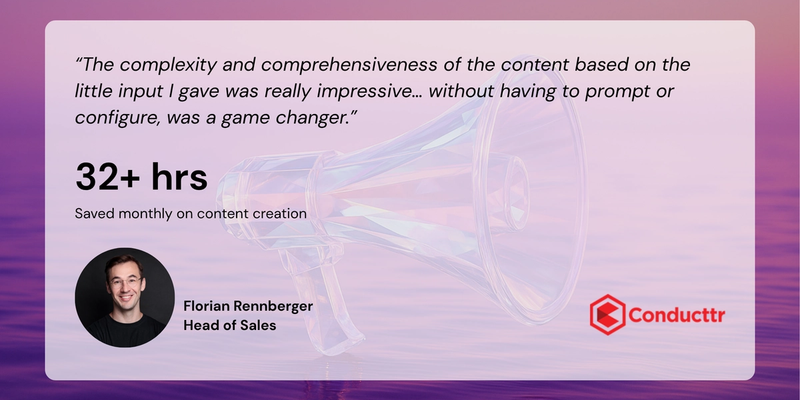
How Conducttr Germany Scaled German GEO and AI Visibility with Axy.digital
Conducttr Germany, a crisis simulation SaaS, climbed to #2 out of 6 competitors in German-language AI search visibility across ChatGPT, Gemini, Perplexity, and Claude — using Axy.digital's autonomous GEO engine.
A practical guide to AEO / GEO in 2026
Build a GEO blueprint for Brand Citability that lifts your AI Visibility Score without constant manual input or oversight.
Shifting KPIs for the Generative Search Era: Measuring Authority Over Traffic
Why authority and citation metrics are replacing traffic as the core measure of search success in the age of AI discovery.
How Axy.digital Compares
See exactly how Axy.digital stacks up against the tools on your shortlist.
Axy.digital vs Blaze.ai
See how Axy.digital compares as the top Blaze.ai alternative.
Axy.digital vs GetDojo.ai
See how Axy.digital compares as the top GetDojo.ai alternative.
Axy.digital vs Jasper
See how Axy.digital compares as the top Jasper alternative.
Axy.digital vs Copy.ai
See how Axy.digital compares as the top Copy.ai alternative.
Axy.digital vs Clearscope
See how Axy.digital compares as the top Clearscope alternative.
Axy.digital vs Surfer SEO
See how Axy.digital compares as the top Surfer SEO alternative.
Axy.digital vs AirOps
See how Axy.digital compares as the top AirOps alternative.
Axy.digital vs Writesonic
See how Axy.digital compares as the top Writesonic alternative.
Axy.digital vs Gauge
See how Axy.digital compares as the top Gauge alternative.
Axy.digital vs Sprout Social
See how Axy.digital compares as the top Sprout Social alternative.
Axy.digital vs Taplio
See how Axy.digital compares as the top Taplio alternative.
Axy.digital vs ColdIQ
See how Axy.digital compares as the top ColdIQ alternative.
Axy.digital vs Workflows.io
See how Axy.digital compares as the top Workflows.io alternative.
Axy.digital vs Traditional Agency
See how Axy.digital compares as the top Traditional Agency alternative.
Axy.digital vs DIY Agents
See how Axy.digital compares as the top DIY Agents alternative.
Axy.digital vs HubSpot
See how Axy.digital compares as the top HubSpot alternative.
FAQ
Frequently asked questions
It's an AI system that turns real-time search demand, AI prompts, and competitor gaps into SEO articles, GEO-optimized content, and AEO-style answers, then publishes and refines them continuously, so your brand ranks on Google and gets cited by AI search engines without manual work.
Writing tools still need you to research, prompt, plan, and publish manually. GEO, AEO & SEO Autopilot runs the full loop itself: it detects demand, builds the content strategy, writes and publishes the content, distributes it for backlinks, and learns from what performs, with no prompting required.
By default, Axy.digital publishes around 30+ GEO articles per month, fully autonomously, though volume adjusts to your market's real demand and citation gaps rather than a fixed quota.
Both. It runs SEO, GEO, and AEO in one workflow, so the same content is built to rank in traditional search and get cited or recommended inside AI answers like ChatGPT, Perplexity, and Google AI Overviews.
Yes, through Intelligent PR, an add-on that distributes press releases to publications frequently cited by AI search engines, earning high-authority backlinks.
Results vary by market, but our Wingbits case study saw an 11x increase in AI visibility and climbed to #3 in its category within 90 days.
Yes, you can review and approve content before it publishes, or run it fully autonomously if you'd rather not touch it.
Generate content for how buyers search now
Axy.digital turns live demand into SEO, AEO, and GEO content built to improve discovery across Google and AI search.