
Core Product Tutorials
How to Read Your AI Visibility Report
Your AI Visibility Report shows whether your brand appears when people ask AI systems about your category, products, competitors, use cases, and customer problems. It helps you understand where your brand is mentioned, where your website is cited, which competitors appear more often, which prompts you are missing from, what sources AI systems are citing, what search queries LLMs use to surface answers, and what content you should create next. Use this report to improve your visibility across AI search and answer engines.
On this page
- Before you start
- Step 1: Open your AI Visibility Report
- Step 2: Understand how prompts are mapped
- Step 3: Review monthly visibility
- Step 4: Review visibility across AI systems
- Step 5: Understand mention rate
- Step 6: Understand citation rate
- Step 7: Understand first-party and third-party citations
- Step 8: Review LLM web search queries
- Step 9: Review competitor visibility and rank
- Step 10: Review prompt-level visibility
- Step 11: Review recommended actions
- Step 12: Generate a campaign from a visibility gap
- FAQ
- Best practices
New to this? Start with what AI visibility means for the definition and why it matters.
Before you start
Make sure you have:
- Completed onboarding
- Approved your marketing strategy
- Selected competitors
- Added relevant website and knowledge base resources
- Generated or opened your AI Visibility Report
Your report is stronger when Axy.digital has accurate company context, competitor data, and search context.
Step 1: Open your AI Visibility Report
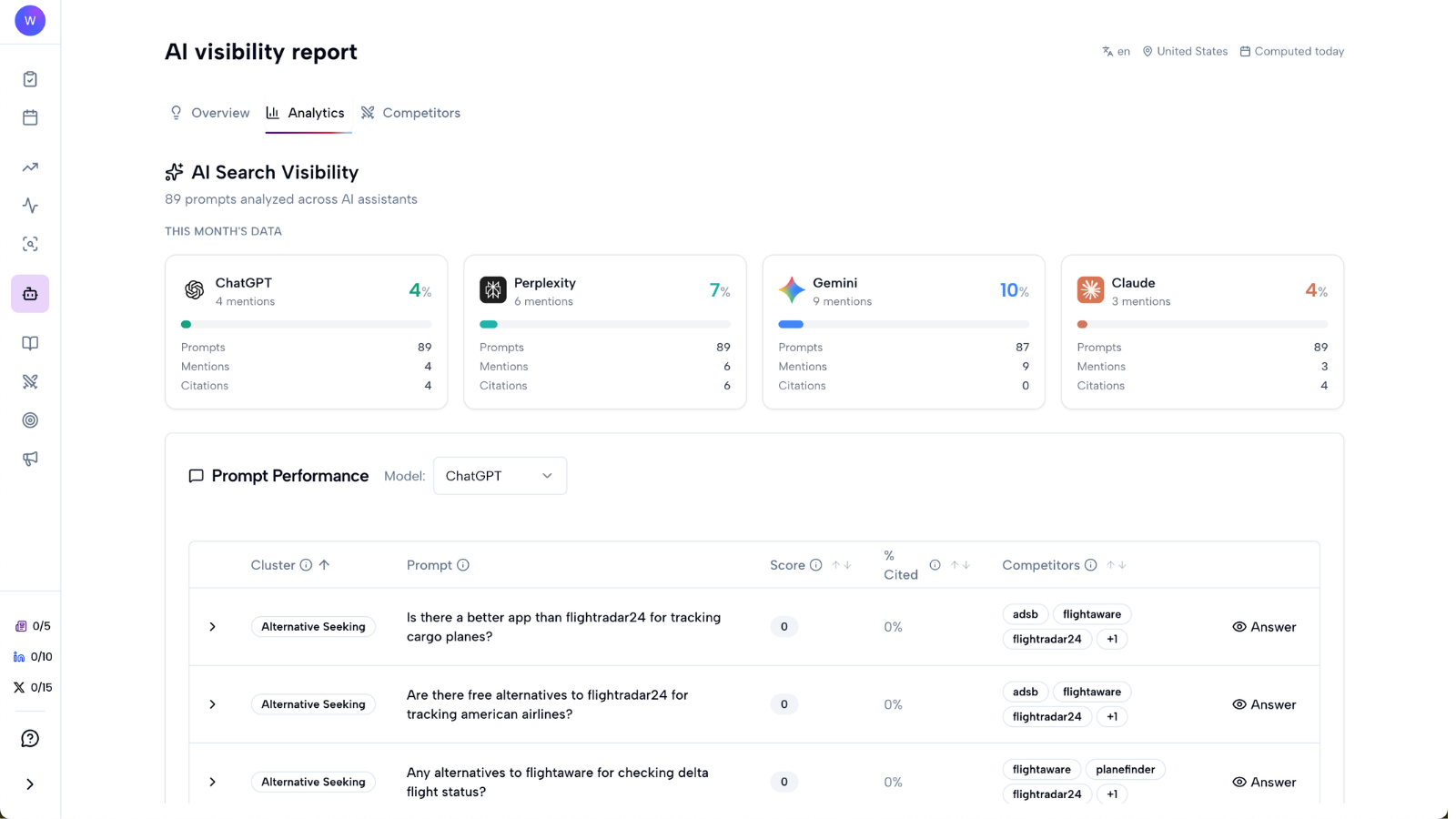
From your dashboard, open AI Visibility Analytics or your latest AI Visibility Report. When you open the report, it will already be populated with prompts generated for your brand. These prompts are based on:
- Your approved marketing strategy
- Your positioning
- Your target audience
- Your competitors
- Search keyword trends
- Category demand
- Customer intent
- Axy.digital’s proprietary prompt-mapping framework
Axy.digital typically generates 89–100 prompts per brand, mapped across the full buyer journey. These prompts are structured around how users typically ask AI systems for recommendations, comparisons, explanations, and buying guidance.
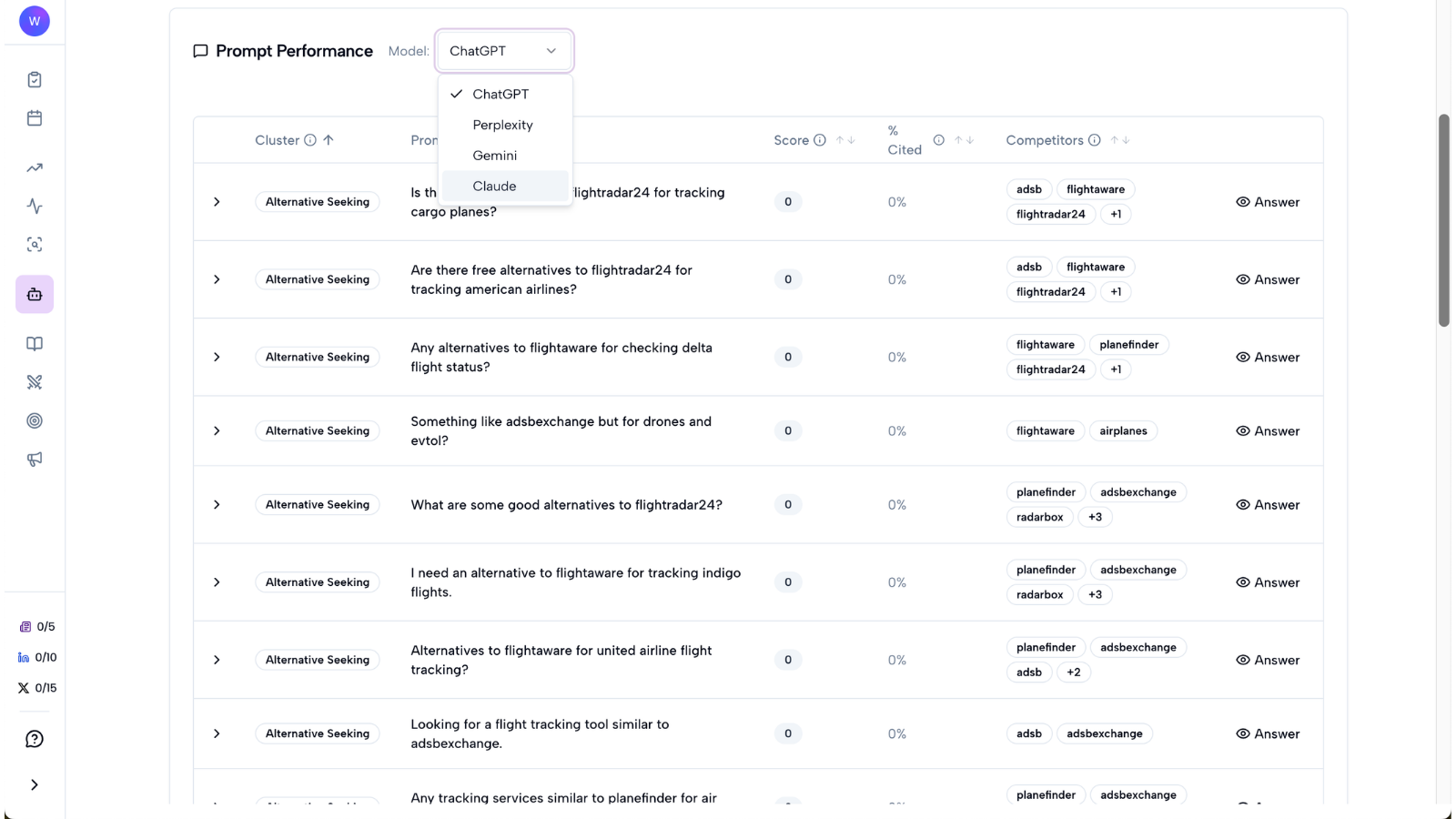
Step 2: Understand how prompts are mapped
Axy.digital maps prompts across the funnel:
TOFU: Top of funnel
These prompts capture early-stage awareness and education. Examples:
- “What is AI visibility?”
- “How does GEO differ from SEO?”
- “Why are companies using AI for marketing?”
TOFU prompts help you understand whether your brand appears in broad educational conversations.
MOFU: Middle of funnel
These prompts capture comparison, category, and solution research. Examples:
- “Best AI marketing tools for startups”
- “AI tools for improving search visibility”
- “How to choose a GEO platform”
MOFU prompts show whether your brand appears when users are actively comparing approaches, tools, or categories.
BOFU: Bottom of funnel
These prompts capture high-intent buying and competitor comparison behavior. Examples:
- “Axy.digital vs Jasper”
- “Best alternative to SEO agencies”
- “Which AI marketing platform should I use for B2B SaaS?”
BOFU prompts help you understand whether your brand appears when buyers are close to making a decision.
Step 3: Review monthly visibility
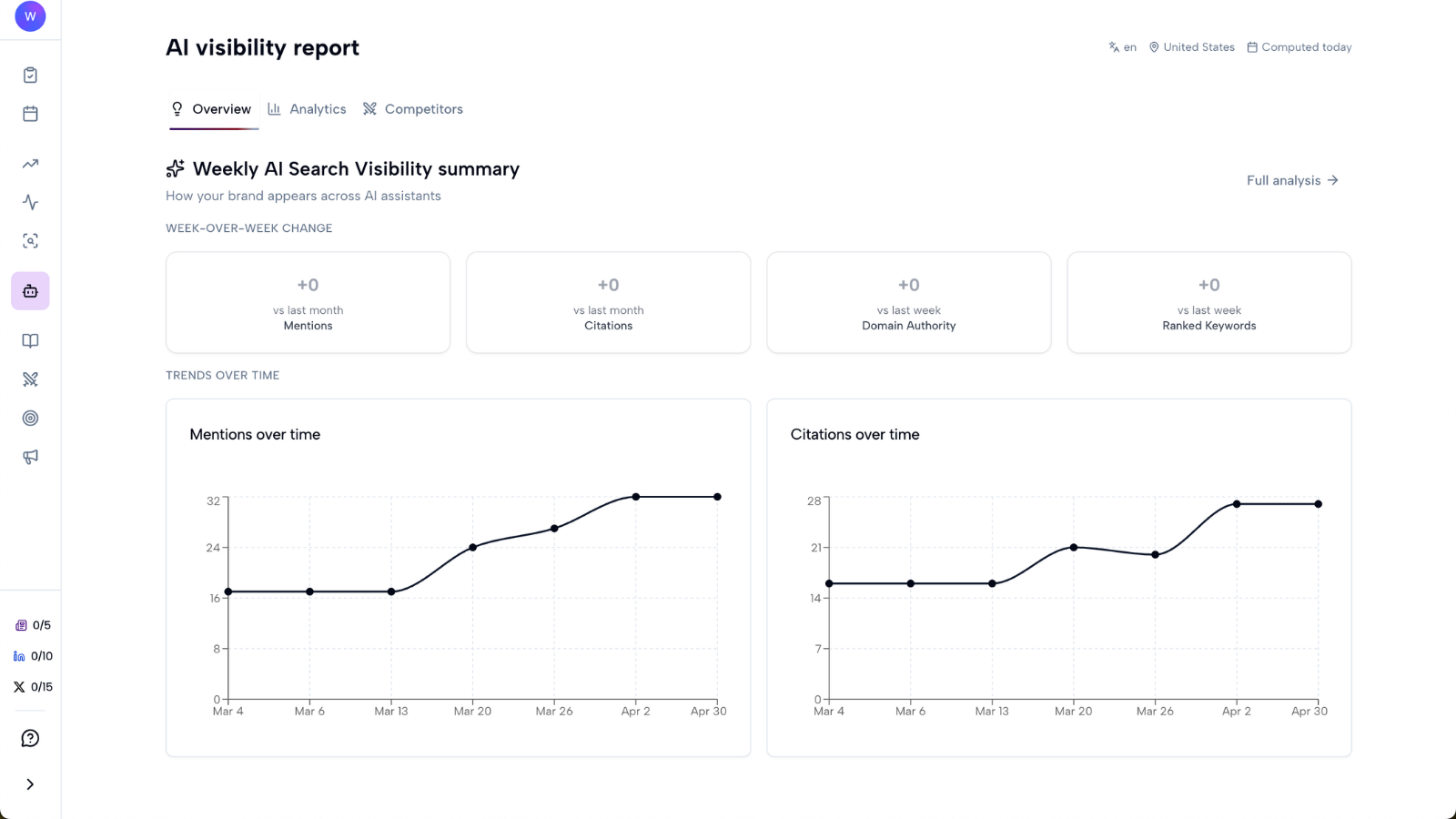
AI visibility is measured monthly. Each month, Axy.digital checks your selected prompt set across AI systems and tracks how visibility changes over time. Monthly tracking helps you see:
- Whether your brand is becoming more visible
- Whether competitors are gaining or losing visibility
- Which prompts are improving
- Which prompts still need content
- Whether new GEO content is helping
- Whether your citation rate is changing
Your first report creates a baseline. Future reports show whether your AI visibility is improving.
Step 4: Review visibility across AI systems
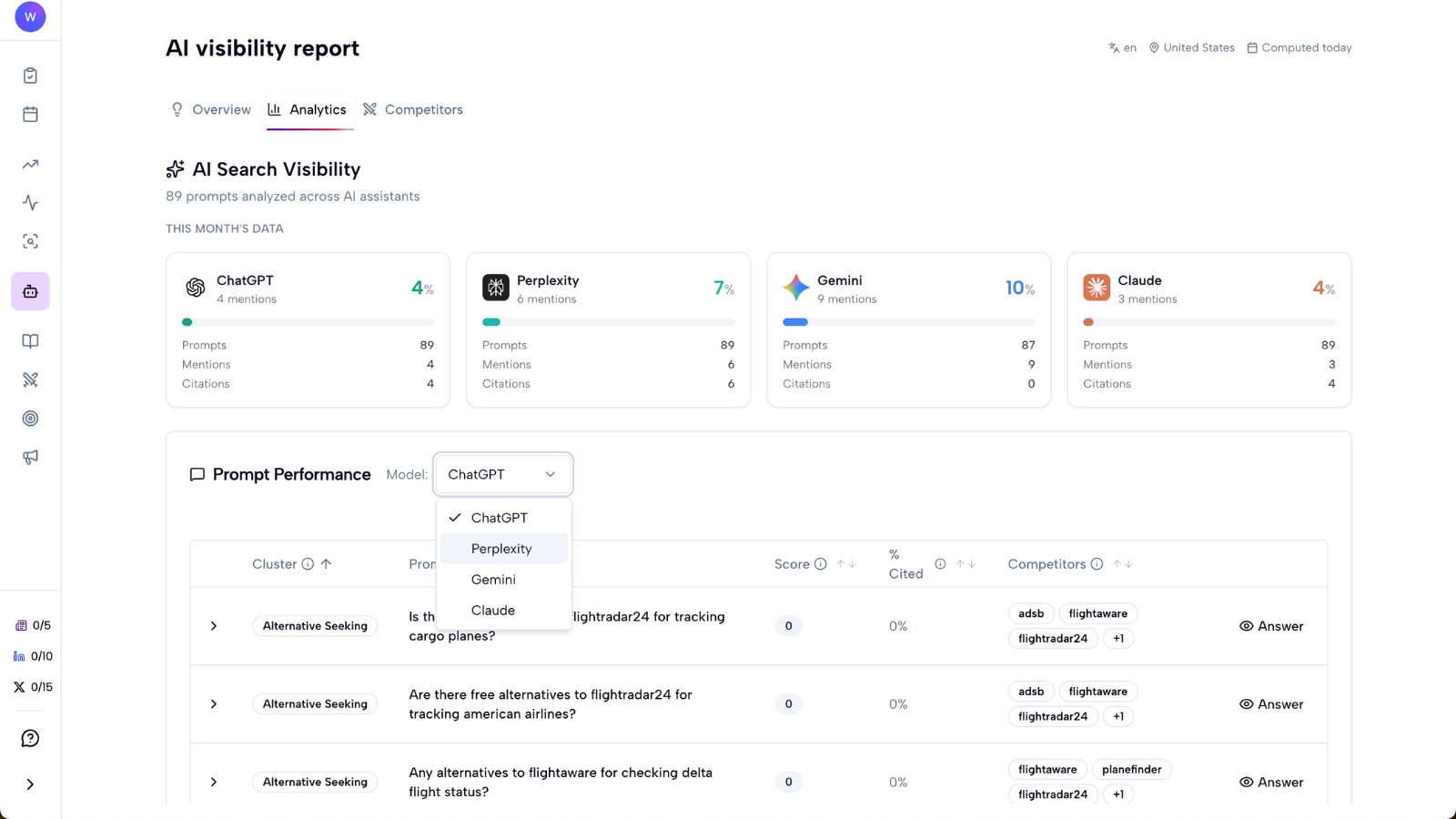
Axy.digital measures mentions and citations for each prompt across:
- ChatGPT
- Gemini
- Perplexity
- Claude
For every prompt, Axy.digital checks whether your brand appears, whether your website is cited, which competitors are mentioned, and which sources are used. Your visibility may vary by platform. For example, you may be visible in Perplexity but not in Claude, or cited in Gemini but only mentioned in ChatGPT. This breakdown helps you understand where your brand is strongest and where more content or authority may be needed.
Step 5: Understand mention rate
Mention rate shows how often your brand is mentioned in AI-generated answers across the tracked prompts. For example, if Axy.digital tracks 100 prompts and your brand appears in 20 of the answers, your mention rate is 20%. Mention rate helps you understand whether AI systems recognize your brand as relevant to your category. A low mention rate may mean:
- Your website does not clearly cover the topic
- Competitors have stronger content
- Your brand is not associated strongly enough with the category
- Your content is not structured for AI retrieval
- There are not enough credible sources connecting your brand to the topic
Step 6: Understand citation rate
Citation rate shows how often AI systems cite your website as a source. This is different from being mentioned. A brand can be mentioned without being cited. Citation rate helps you understand whether AI systems are using your pages as supporting sources. A low citation rate may mean:
- Your content is not specific enough
- Your pages lack clear structure
- Your articles do not answer high-intent questions directly
- Your site needs stronger topical authority
- You need more citation-worthy pages
- Your internal linking structure needs improvement
For GEO, citation rate is especially important because it shows whether your content is being used as a source in AI answers.
Step 7: Understand first-party and third-party citations
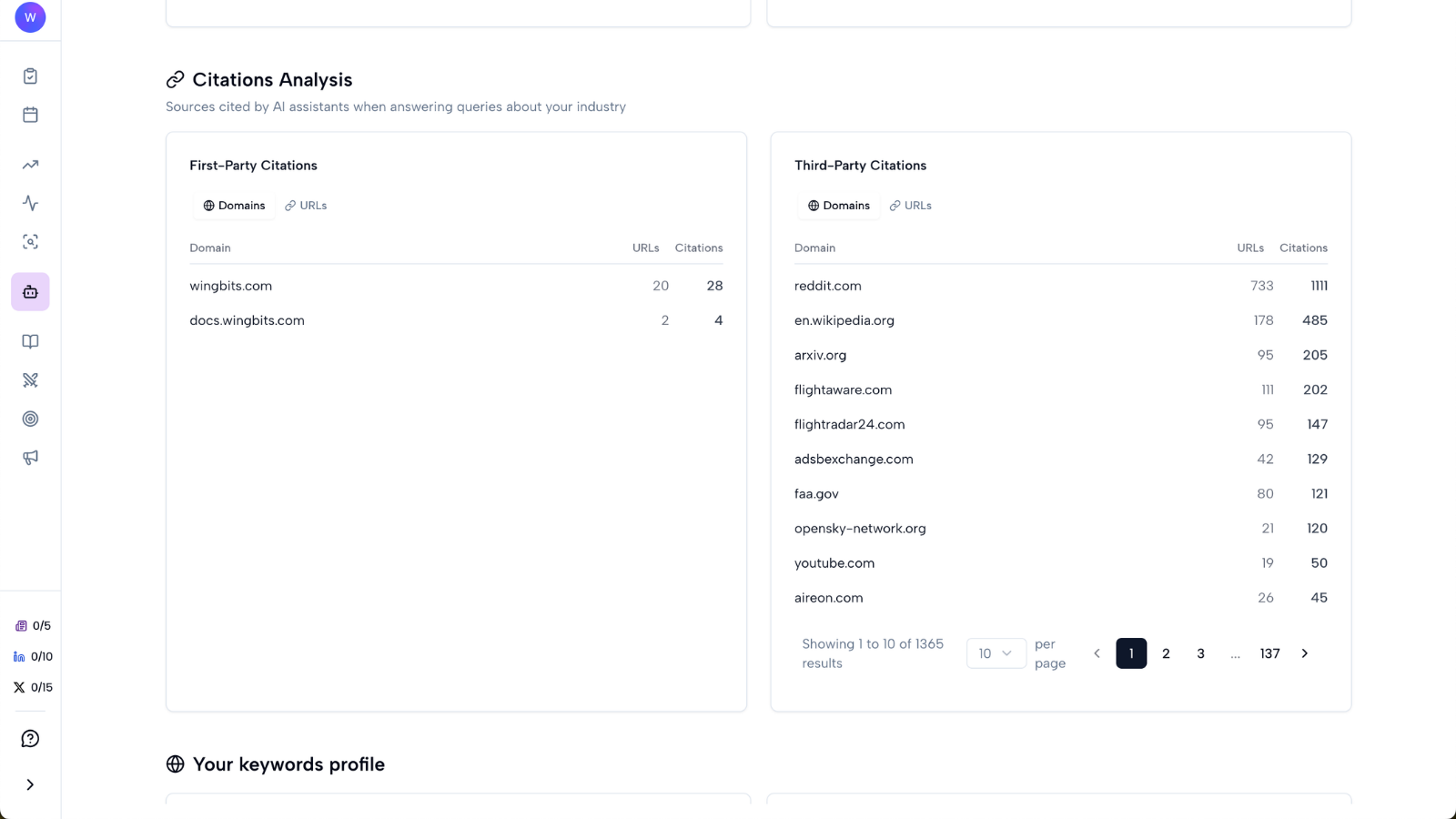
Axy.digital tracks both first-party and third-party citations.
First-party citations
First-party citations are citations to your own website URL. These show when AI systems use your website as a source. Examples may include:
- Your homepage
- Product pages
- Use-case pages
- Blog posts
- Tutorials
- Case studies
- Comparison pages
- Documentation
First-party citations are important because they show that AI systems are retrieving and trusting your own content.
Third-party citations
Third-party citations are citations to URLs that are not yours. These may include:
- Media articles
- Directories
- Review sites
- Partner pages
- Research reports
- Community pages
- Industry publications
- Competitor pages
- Customer mentions
- Social or public profile pages
The third-party citation list is useful because it shows which external sources AI systems are relying on to answer prompts in your category. You can also use this list as a resource when sourcing backlinks, partnerships, directory placements, PR opportunities, or third-party mentions. If a source is frequently cited in your category but does not mention your brand, that may be an opportunity.
Step 8: Review LLM web search queries
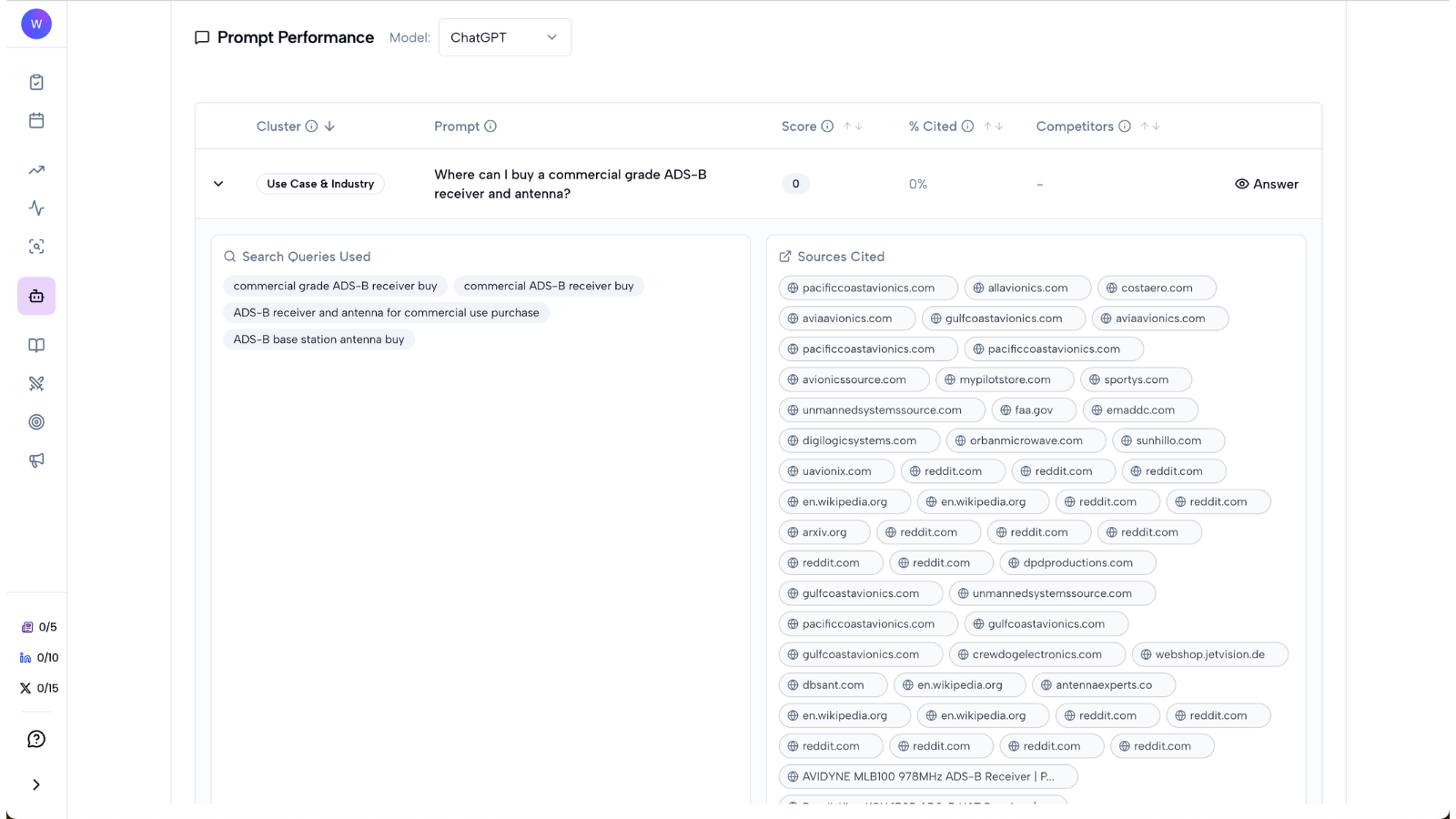
Axy.digital also measures the queries that LLMs use when they perform a web search to surface answers. This helps you understand how AI systems are looking for information about your category. Review these queries to identify:
- Search terms AI systems associate with your category
- Query patterns that surface competitors
- Topics where your site is missing
- Content gaps you can address
- Pages that may need clearer structure
- Opportunities for GEO, AEO, or SEO content
These queries are useful because they show not only the final AI answer, but part of the retrieval path behind the answer.
Step 9: Review competitor visibility and rank
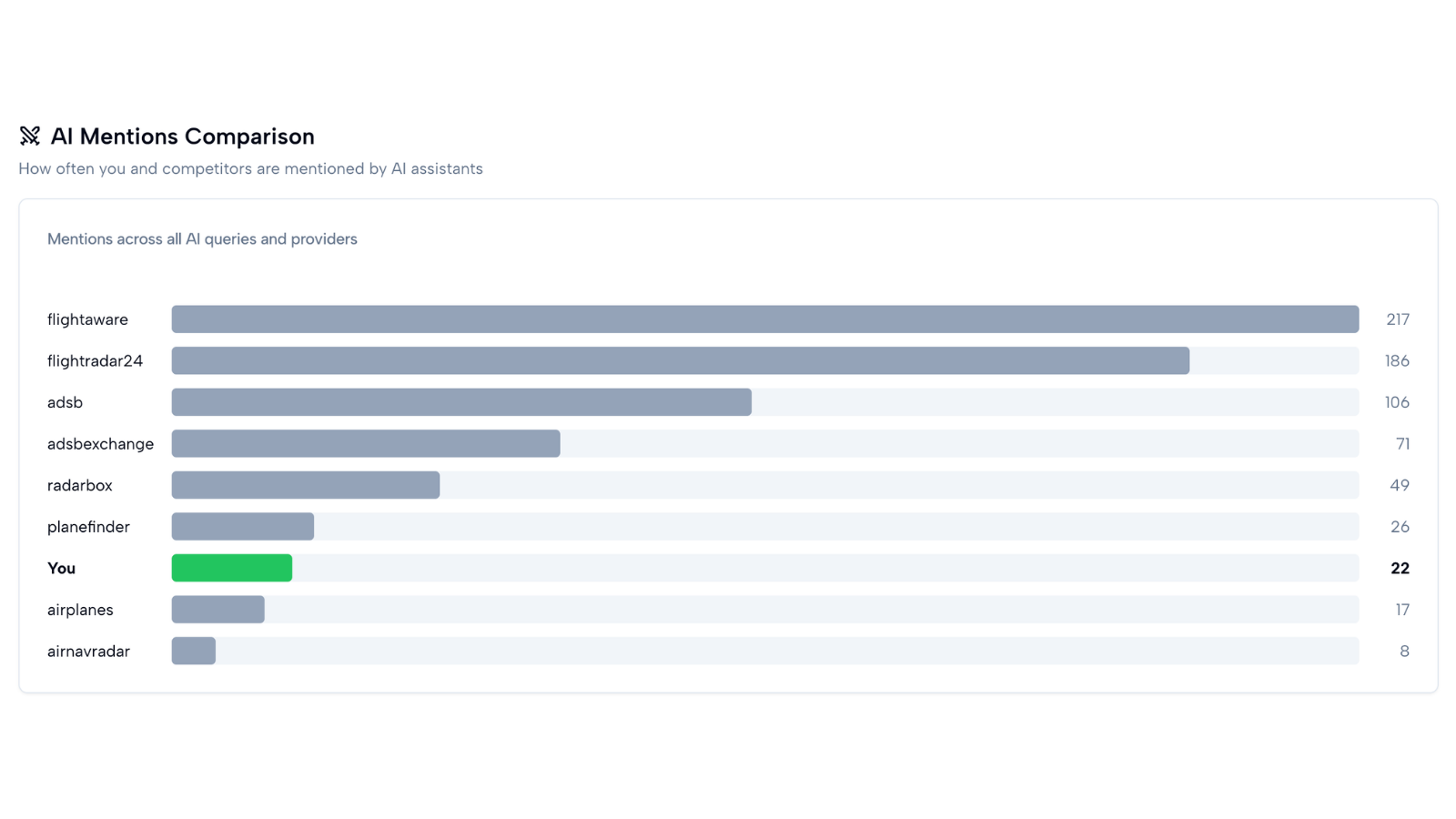
Your AI Visibility Report also identifies competitor visibility. Axy.digital compares your brand against selected competitors and shows how each company ranks across the prompt set. Review:
- Which competitors appear most often
- Which competitors are cited most often
- Which prompts competitors own
- Which competitors rank above you
- Which LLMs favor which competitors
- Which sources are helping competitors appear
- Where your brand has an opportunity to displace them
Competitor visibility is useful because AI answers often shape buyer shortlists before buyers reach your website. If competitors are consistently mentioned or cited for important prompts, those prompts may become priority campaign opportunities.
Step 10: Review prompt-level visibility
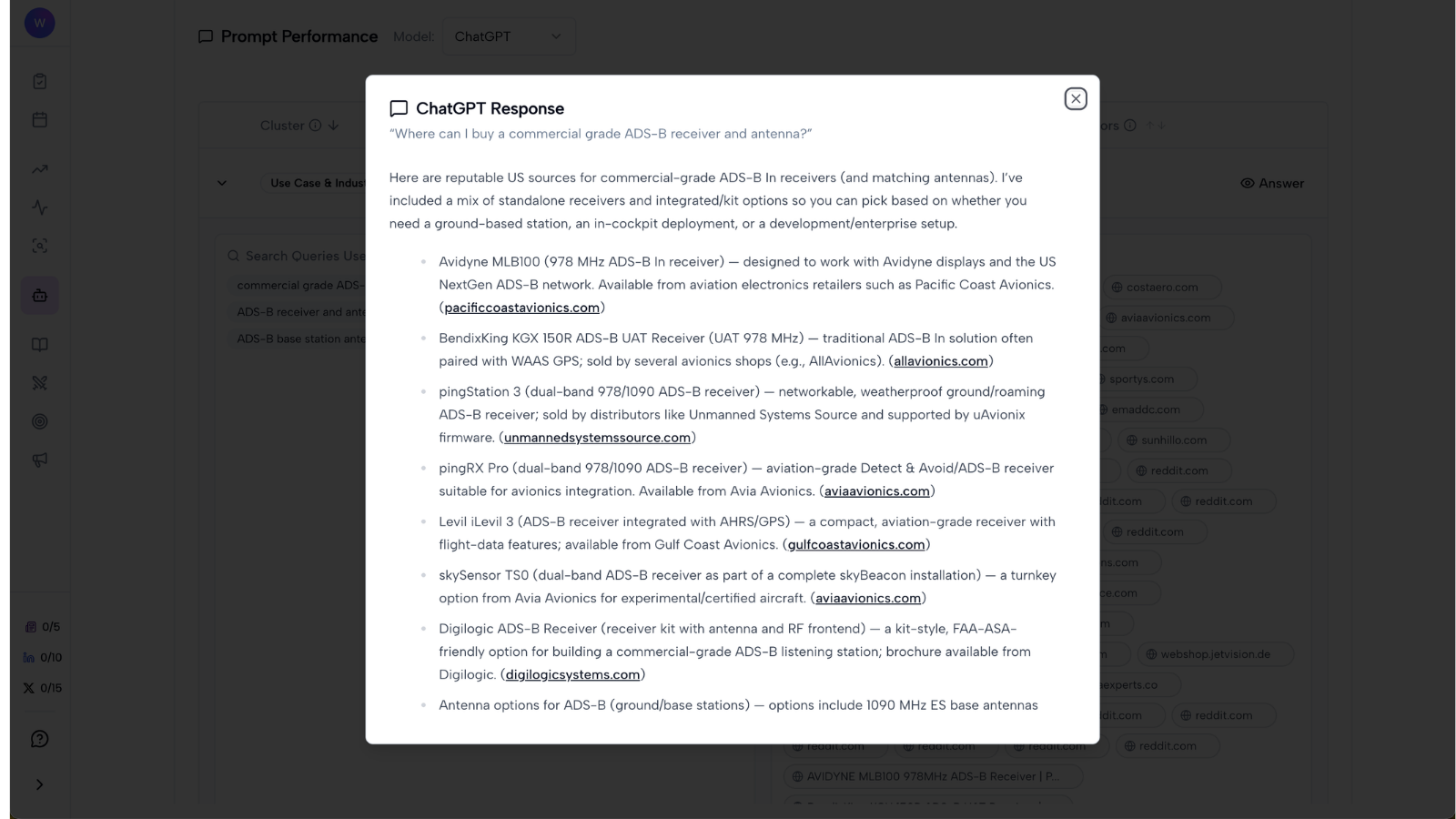
Prompt-level visibility shows how your brand performs on each individual prompt. Review prompts where:
- Your brand appears
- Your website is cited
- Competitors appear
- Competitors are cited
- Your brand is missing
- AI answers include outdated or incomplete information
- Third-party sources dominate the citations
This section helps you understand what buyers may see when they ask AI systems questions about your category. Useful prompt types include:
- Category prompts
- Use-case prompts
- Comparison prompts
- Alternative prompts
- Problem prompts
- Local or regional prompts
- Industry-specific prompts
- Buying-intent prompts
Step 11: Review recommended actions
Axy.digital turns AI visibility gaps into recommended actions. These may include:
- Create a GEO article
- Add or update an FAQ section
- Create a comparison page
- Create a use-case page
- Refresh an existing article
- Strengthen internal links
- Add clearer product explanations
- Create content for a missing prompt cluster
- Generate LinkedIn or X content around a visibility gap
- Target third-party citation opportunities
- Build backlinks from sources AI systems already cite
Axy.digital uses your website index to suggest where new content should link internally.
Step 12: Generate a campaign from a visibility gap
If you find an important prompt where your brand is missing, generate a campaign from that gap. Axy.digital can turn the gap into:
- GEO article
- AEO answer content
- LinkedIn posts
- X posts or threads
- Comparison content
- Internal linking recommendations
This is one of the most direct ways to improve AI visibility over time. Generated content will be added to your marketing calendar for review, approval, scheduling, or publishing.
FAQ
Where do the prompts come from?
Axy.digital generates prompts based on your marketing strategy, positioning, competitors, search keyword trends, and category demand. The prompts are mapped across TOFU, MOFU, and BOFU using Axy.digital’s proprietary framework for how users typically write prompts when researching, comparing, and choosing solutions.
What is the difference between mention rate and citation rate?
Mention rate tells you how often your brand appears in AI answers. Citation rate tells you how often your website is used as a source. Both matter. Mention rate shows brand presence. Citation rate shows source authority.
What is the difference between first-party and third-party citations?
First-party citations are citations to your own website. Third-party citations are citations to any other URL. First-party citations show whether AI systems are using your content directly. Third-party citations show which external sources influence AI answers in your category. The third-party citation list can help you identify backlink, PR, directory, partnership, and authority-building opportunities.
Why is my AI visibility low?
Low visibility is common at the start. It may happen because your site does not cover enough high-intent prompts, your content is not structured clearly, competitors have stronger pages, your brand is new or under-cited, your website lacks comparison, use-case, or educational content, AI systems do not yet associate your brand with the category, or third-party sources in your category do not mention your brand. Use the report to find the highest-priority gaps.
How often is AI visibility measured?
AI visibility is measured monthly. Monthly tracking gives you enough time to publish content, build authority, and see whether your visibility is improving across prompts and AI systems.
Best practices
Treat the first report as your baseline
Your first report shows where you are starting from. The goal is to improve over time.
Focus on high-intent prompts
Prioritize prompts that are close to buyer research or decision-making.
Review competitor rankings
If competitors rank above you for important prompts, use those prompts to guide GEO content, comparison pages, and social campaigns.
Create citation-worthy content
Direct answers, structured headings, FAQs, internal links, and clear product explanations can help AI systems understand and retrieve your content.
Use third-party citations strategically
Look at which external sources AI systems cite often. These sources may reveal backlink, PR, directory, or partnership opportunities.
Turn gaps into campaigns
The report is most useful when you act on it.